rQ JOURNAL
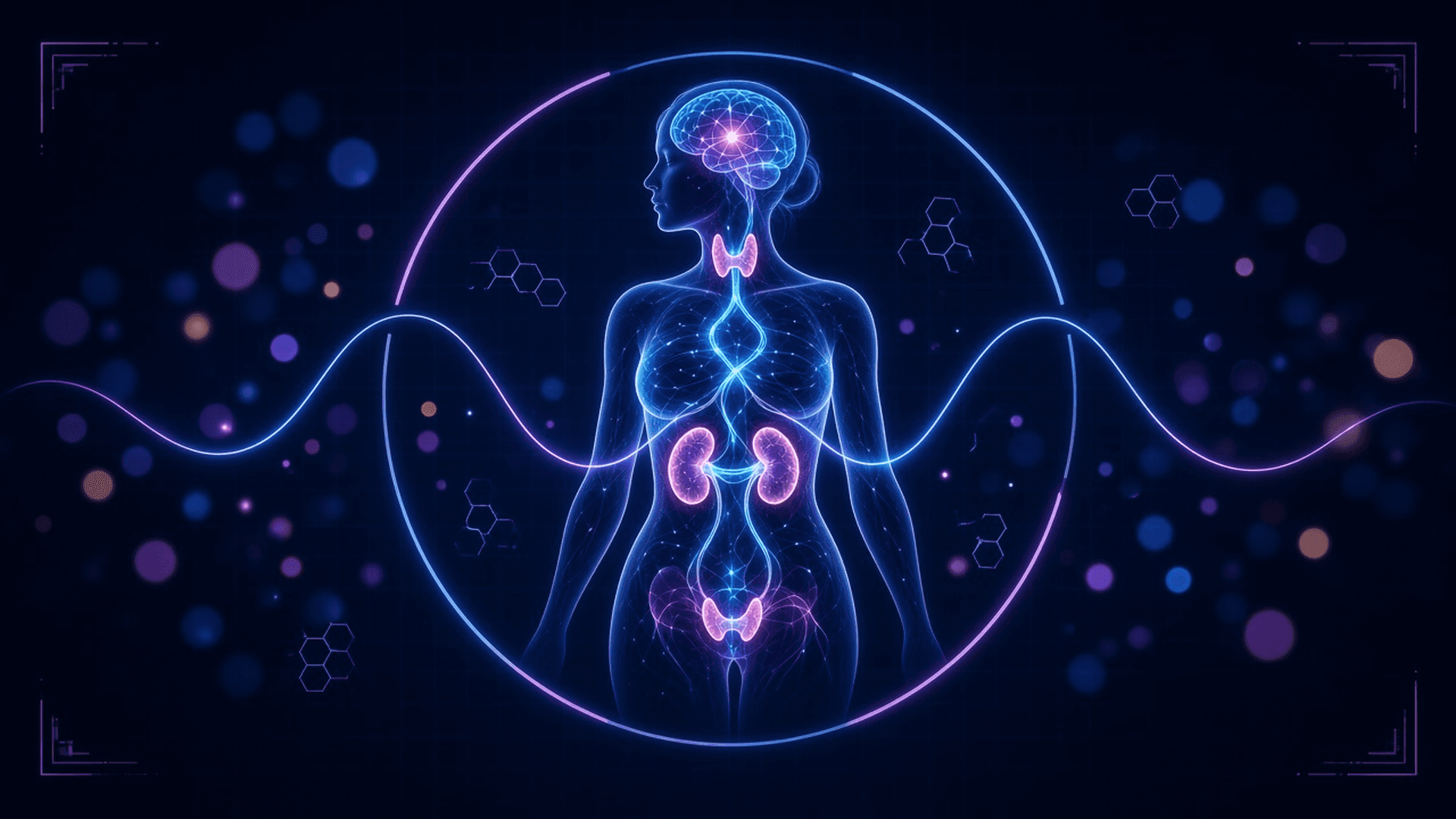
Do you experience unexplained weight gain despite a disciplined diet?
Many women reach their early forties eating the same meals and doing the same workouts that kept them steady for years, and the body starts changing anyway. Weight settles around the middle, sleep breaks up at 3 a.m., moods swing harder, and energy fades by midafternoon. Nothing about the effort changed. What changed is the hormonal system underneath it, and once you understand how that system works, those shifts start to make sense.
A woman's body runs on cycles that a man's body does not have. Estrogen and progesterone rise and fall across each month, shift dramatically in pregnancy, become erratic in perimenopause, and settle low after menopause. Those hormones also answer to cortisol, thyroid hormone, and insulin, so a change in one moves the others. That is why women's health is hormonal health first, and why the same advice can work at 30 and fall short at 45.
The four hormonal seasons
In the menstrual years, estrogen leads the first half of each cycle and progesterone leads the second. Monthly bleeding spends iron, folate, and B12, so these are the nutrients that run short most often, and iron deficiency is common in young women. Pregnancy and the months after birth bring the highest nutrient demand of a woman's life, with folate, choline, iodine, DHA, calcium, and iron all climbing, followed by a steep drop in estrogen and progesterone after delivery.
Perimenopause usually begins in the early to mid forties, years before the final period. Progesterone tends to fall first, which is why sleep and mood often change before hot flashes appear, and estrogen swings up and down instead of falling in a straight line. Menopause itself is the one-year mark after the last period. After that, the ovaries make very little estrogen, and the body shifts production to fat tissue, bone, and the brain, which convert hormones made by the adrenal glands into estrogen. That makes adrenal health and stress load more important after 45 than before.
Why the weight shifts even when your habits do not
Long-term studies of midlife women show something surprising. The scale does not speed up at menopause, but what sits underneath the number changes. Fat mass rises and muscle falls faster through the transition, and fat moves toward the abdomen. Less muscle means a slower metabolism and weaker blood sugar control, so the same meals land differently.
Stress makes the shift stronger. Chronic stress raises cortisol, cortisol pushes blood sugar up, higher blood sugar raises insulin, and high insulin changes how estrogen is processed and slows thyroid output. Progesterone also tends to drop under long-term stress. Thyroid problems deserve a direct look here, because fatigue, feeling cold, weight gain, constipation, and dry skin overlap almost completely with perimenopause, and low thyroid function is more common in women at every age.
How your body clears estrogen matters too. Everyone has the COMT gene, which helps break down estrogen in the liver, and some people carry a slower variant that clears it less efficiently. Your gut also recycles estrogen back into circulation through a group of bacteria, so constipation and an unhealthy microbiome can keep more estrogen in play than your body needs. These pieces help explain why two women eating the same way can have very different midlife experiences.
Bone, heart, and muscle need their own plan
After 50, about one in five women has osteoporosis compared with about one in twenty men, and heart risk climbs faster through the menopausal transition. Strength training lowers the risk of early death, and combining lifting with impact work like jumping, stairs, or loaded carries preserves hip and spine bone better than lifting alone. Vitamin D by itself does not reduce fractures, while vitamin D combined with calcium does. Hormone therapy remains the most effective treatment for severe hot flashes, and for women under 60 or within ten years of menopause the benefits usually outweigh the risks, but that decision belongs with a clinician who knows your history.
Reading the weight gain signal with precision
A yes to unexplained weight gain despite a disciplined diet points to a hormonal or metabolic system working against your effort. It carries more weight alongside nearby signals: weight that collects around the abdomen, feeling cold regardless of the room, hair thinning, waking between 3 and 5 a.m. feeling wired but tired, sugar cravings, and mood changes without a clear cause. When those show up together, the driver is usually upstream, such as high cortisol, insulin resistance, a sluggish thyroid, slow estrogen clearance, or gut problems, and each of those has a different fix.
Practical next steps
Build the foundation with lifestyle changes: eat 25 to 35 grams of protein at every meal, lift weights two or three days a week and add impact work like stairs or jumping, keep blood sugar steady by pairing carbohydrates with protein and fiber, and avoid long fasts, especially in the week before your period. Protect seven to nine hours of sleep, since broken sleep raises cortisol and drives the cycle above.
Fill the common gaps with targeted supplements: magnesium glycinate at 300 to 400 milligrams in the evening for sleep, creatine monohydrate at 3 to 5 grams a day for muscle and energy, vitamin D with calcium for bone after menopause, and omega-3 fish oil. Folic acid at 400 to 800 micrograms belongs in any plan if pregnancy is possible. Soy isoflavones or black cohosh are reasonable options for hot flashes, and ashwagandha can lower cortisol in short courses with a clinician aware.
Find the driver with labs: a full thyroid panel with TSH, FT4, FT3, reverse T3, and thyroid antibodies, fasting insulin and HbA1c, ferritin, vitamin D, a morning cortisol or four-point salivary cortisol test, and cycle-timed estradiol and progesterone if you are still menstruating.
The rQ Perspective
Midlife weight gain is one node in a connected network of hormones, stress, blood sugar, thyroid, gut health, and detox pathways. The useful signal is how those pieces interact in your body. When you can see which one is pushing back, the frustration of doing everything right and still changing turns into a plan built for the season you are in.
The rQ assessment is the most comprehensive functional medicine assessment on the market. It gives a clinical-grade look at your genes, detox pathway function, and drivers of illness such as pathogens, and it helps you understand your body. Take the rQ assessment at www.rq.one.
Chase answers, not symptoms.
Take the rQ assessment
Back to Journal