
rQ JOURNAL
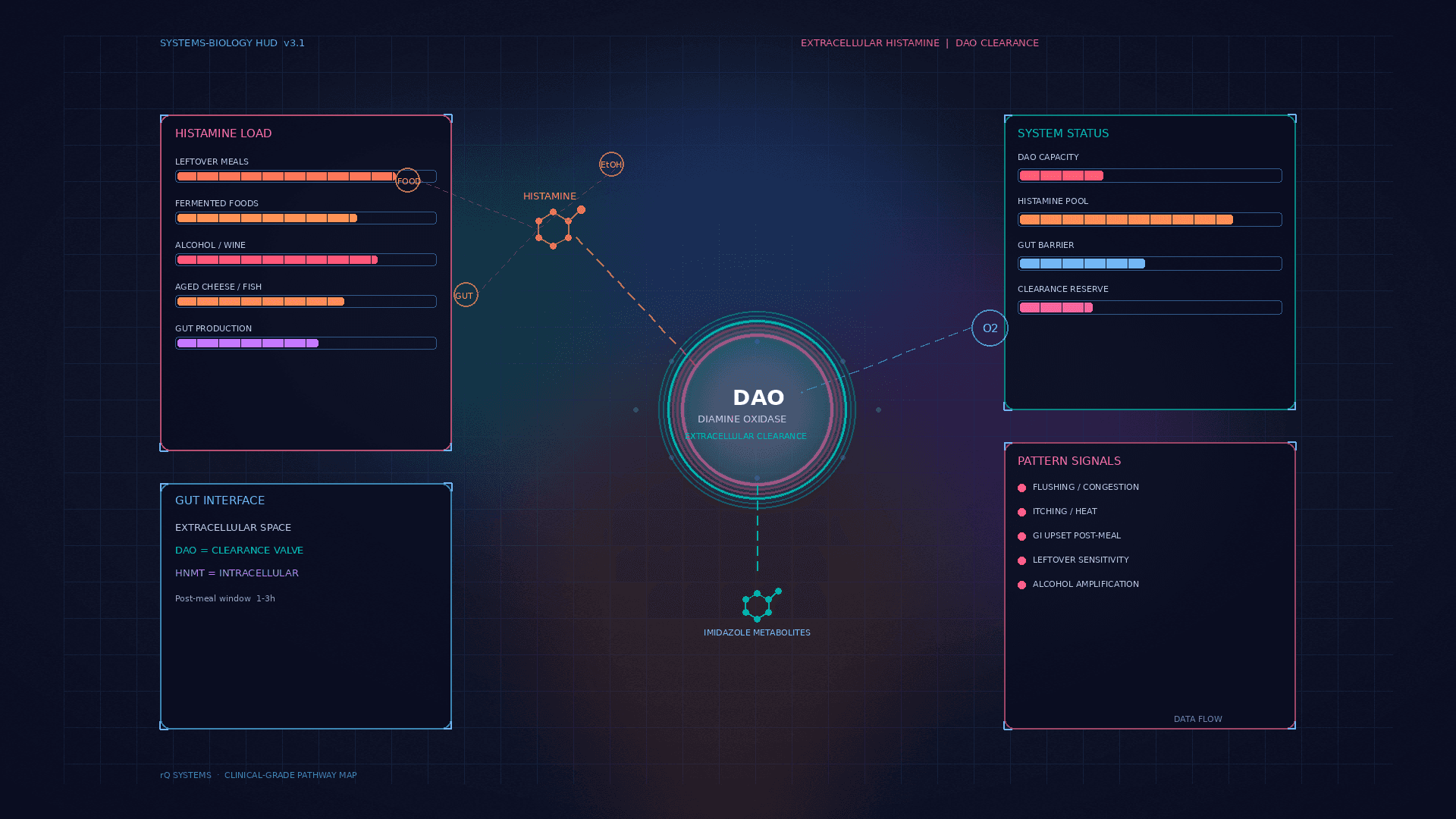
Everyone has the DAO gene. The useful question is not whether you "have DAO." It is how much diamine oxidase capacity is available to clear histamine outside cells when food, gut, and immune load rise together. Lower DAO capacity can leave extracellular histamine uncleared longer, showing up as flushing, congestion, itching, GI upset, and food reactions that look random until you map timing and load.
DAO (diamine oxidase) is the primary enzyme for breaking down histamine in the extracellular space, especially along the gut lining after meals. That is a different job from HNMT, which methylates histamine inside cells. When DAO reserve is low relative to histamine arriving from food, alcohol, leftovers, fermentation, or gut production, the extracellular signal stays high. The pattern is capacity under dietary and gut load, not a vague "allergy to everything" story.
Reframe the DAO question
The common question is, "Do I have a DAO problem?" A sharper question is, "How much extracellular histamine is arriving, and how much DAO clearance reserve is online right now?"
DAO capacity is shaped by genetics, gut lining integrity, nutrient cofactors, hormones, medications, alcohol, and inflammatory load. A person may tolerate a fresh meal and react to the same foods as leftovers. They may sail through citrus one week and flush after cheese, fish, chocolate, or red wine the next. That variability is the systems signature: load changed, reserve changed, or both.
Capacity-under-load beats label-under-glass. DAO is an engineering constraint at the gut-histamine interface. Map inputs against clearance instead of collecting forbidden-food lists in isolation.
What DAO does in plain language
After a meal, histamine can enter from aged, fermented, leftover, or personally high-histamine foods, and from microbial activity in the gut. DAO helps oxidize that extracellular histamine so it does not keep signaling through receptors in the gut, skin, and vessels. When DAO activity is relatively low, the same meal can produce nasal congestion, flushing, itching, irritability, heat, or GI distress shortly after eating.
Alcohol (especially red wine), fermented foods, aged cheese, certain fish, citrus, and chocolate are classic load amplifiers in this pattern language because they add histamine, liberate histamine, or impair clearance. Leftovers matter because histamine can accumulate in stored food even when the original meal felt fine. Pregnancy sometimes raises DAO output, which is why some people report they could eat more foods without symptoms while pregnant: reserve temporarily increased.
DAO does not replace intracellular HNMT work, mast cell tone, gut barrier status, or immune context. It is the extracellular clearance valve. Turning that valve into a full systems map is how food chaos becomes a readable histamine budget.
Signals from the rQ assessment
These two assessment questions are pattern prompts that map cleanly onto extracellular histamine load versus DAO reserve:
Do you feel worse after eating leftover meals?
Do you experience nasal congestion, flushing, itching, or GI upset shortly sometimes after eating meals?
A "yes" on either flags a possible mismatch between post-meal histamine load and DAO clearance capacity. Pair the answers with context: leftover timing, fermented foods, alcohol (especially red wine), citrus, fish, chocolate, cheese, cycle phase, gut symptoms, and whether reactions cluster shortly after eating. Precision in the pattern turns "I react to food" into a timed extracellular clearance problem.
Practical next steps
Run a two-week leftover and timing audit. Note fresh versus stored meals, fermentation, alcohol, and symptoms in the first one to three hours after eating (flushing, congestion, itching, GI upset, heat, irritability). Sequence and clustering matter more than a single bad dinner.
Reduce stacked histamine load while you gather data. Prefer fresher proteins when leftovers reliably worsen symptoms, separate alcohol from high-histamine meals, and notice whether fermented foods change GI tone. This is pattern isolation, not a permanent elimination identity.
Bring the food-timing map to clinical care. Persistent flushing, congestion, multi-food reactivity, or escalating GI symptoms deserve a qualified clinician who can evaluate gut integrity, DAO-relevant cofactors, medication effects, and parallel histamine pathways. The goal is restoring clearance reserve and lowering unnecessary load together.
The rQ Perspective
DAO is one node in the histamine network: extracellular clearance at the gut interface, working alongside intracellular pathways, mast cell tone, and total dietary load. The useful signal is how genetic tendency, leftovers, fermentation, alcohol, and gut status interact. When you map the system, "I react to everything" becomes an observation about histamine budget and clearance timing.
The rQ assessment is the most comprehensive functional medicine assessment on the market. It gives a clinical-grade look at genes, detox pathway functionality, and drivers of illness such as pathogens, and it helps people understand their body. Start at www.rq.one.
Chase answers, not symptoms.
Take the rQ assessment
Back to Journal